
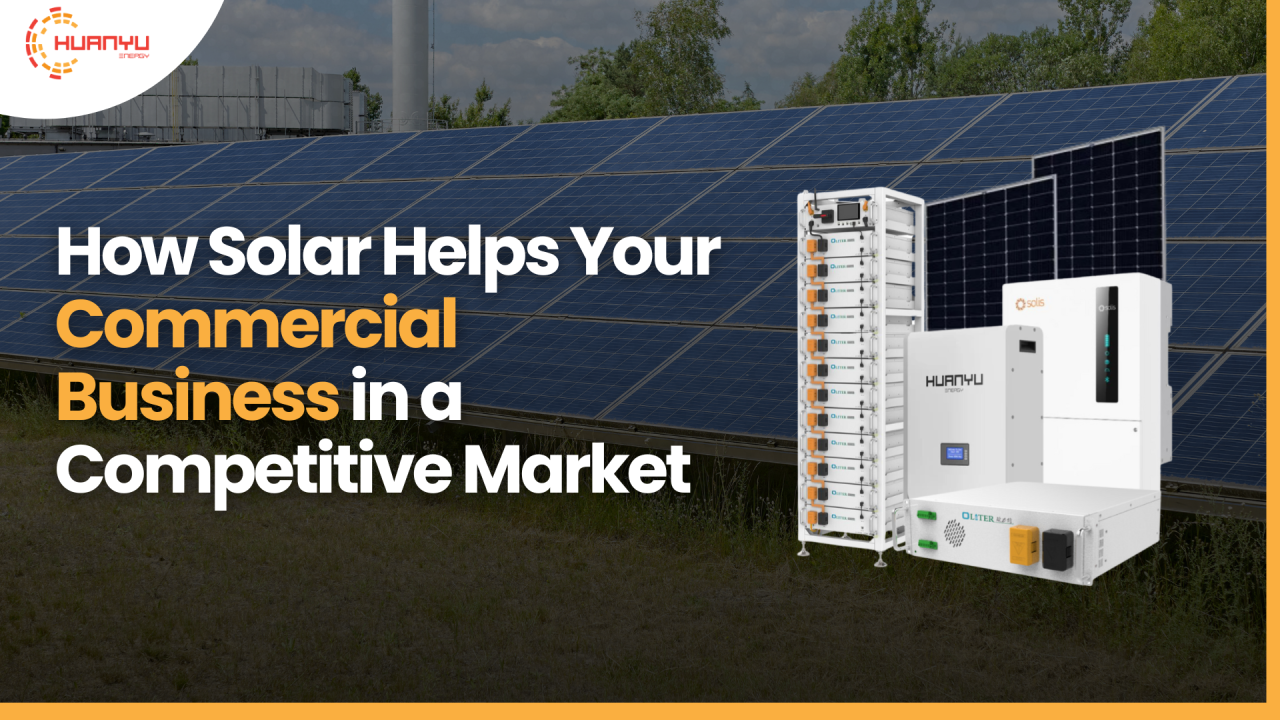
Commercial businesses win (or lose) on operational efficiency and reliability. Energy sits right in the middle of both. When electricity prices rise, when grid reliability becomes unpredictable, or when production is interrupted, the impact shows up quickly in costs, service levels, and customer satisfaction. Solar is not just a sustainability upgrade. It is an energy strategy that can protect margins, stabilize operations, and improve long-term competitiveness.
Cost predictability and margin protection
One of the clearest advantages of solar is cost predictability. In South Africa, further regulated tariff increases have been approved, including 8.76% from April 2026 and 8.83% from April 2027. For businesses, this matters because it is not only the monthly bill that changes. Forecasting and pricing become harder when input costs keep shifting. A well-sized solar PV system reduces the portion of electricity you must buy at future, higher tariffs, helping you plan with more certainty while competitors remain exposed to escalation.
South Africa is also a strong solar market because the resource is genuinely high quality. The Department of Mineral Resources and Energy notes that many areas average more than 2,500 hours of sunshine per year, and typical daily solar radiation is commonly cited in the 4.5 to 6.5 kWh/m² range. That high radiance translates into strong energy yields per installed kilowatt, which supports the business case for daytime-heavy commercial loads like offices, retail, warehousing, cold storage, manufacturing lines, and processing facilities.
Reliability, uptime, and operational continuity
Reliability is the next competitive lever. Even when load shedding/reduction improves or becomes less frequent, the risk of disruption remains a serious business issue. Downtime, spoiled stock, production delays, and overtime recovery costs can be far more damaging than the tariff itself. South African Reserve Bank estimates reported by Bloomberg have put the economic cost of severe load shedding as high as about R899 million per day in some scenarios. Solar paired with the right inverter and storage approach can reduce reliance on diesel and keep critical operations running when the grid fails, which becomes a real differentiator in customer delivery times and service consistency.
Commercial customers also benefit because many tariff structures reward peak reduction, not just energy reduction. Demand-related charges and time-of-use pricing can make peak periods disproportionately expensive, especially in winter. A properly designed solar system can shave peaks during expensive daytime periods, and when storage is added, it can extend that benefit into late afternoon or evening peaks where applicable. In competitive terms, peak management is often where solar shifts from nice savings to serious operating advantage.
Tax treatment and investment efficiency
Tax treatment can further improve project economics, but it has to be handled correctly. SARS guidance explains that, under section 12B, qualifying renewable-energy assets can generally be claimed on a 50/30/20 basis over three years, while photovoltaic solar energy not exceeding 1 MW can qualify for the cost to be deducted in full in the year it is brought into use, provided requirements are met. South Africa also had a temporary enhanced incentive (section 12BA). National Treasury notes it ran from 1 March 2023 until and including 28 February 2025, subject to the rules around eligibility and when the asset is brought into use. The practical takeaway is simple: the right structure depends on timing, system size, and compliance details, so businesses should align their project planning with their tax advisors rather than relying on assumptions.
Wheeling and corporate PPAs for multi-site strategies
Beyond onsite generation, the market is also moving toward multi-site renewable strategies through wheeling and corporate PPAs. South Africa has been formalizing frameworks and rules around third-party wheeling, including published regulatory rules and responsibilities for network services providers. A real-world example is Teraco’s wind PPA arrangement with wheeling, with first power anticipated to be wheeled in 2026 as projects ramp up. For commercial groups with multiple sites, or those constrained by roof space, wheeling can be a pathway to renewable coverage without forcing everything to happen on one premises.
Sustainability, tenders, and carbon exposure
Solar can also support competitiveness through procurement credibility and sustainability expectations. Many larger customers and supply chains increasingly ask for emissions reporting, decarbonisation plans, or proof of improvement over time. SARS notes that South Africa’s carbon tax design includes transitional tax-free emissions allowances that have ranged from 60% to 95%, intended to provide time for emitters to transition through investments in energy efficiency, renewables, and other low-carbon measures. Even where carbon tax is not a direct cost for a given business, the reporting and ESG expectations can influence financing terms, customer requirements, and tender competitiveness.
Why design and load profile matter
The strongest solar outcomes come from matching the system to how the business actually uses power. A site with steady daytime consumption can often prioritise high self-consumption (using solar directly in operations), which typically improves ROI versus exporting energy at low rates. A site with high critical-load requirements may justify storage to maintain operations during interruptions. A site with high late-day peaks may use storage and controls for peak shifting. This is why the same size system can deliver very different values across two businesses.
Component quality and warranty structure matter because commercial solar is a long-term asset, not a short-term gadget. Consistent commissioning standards, correct inverter and battery configuration, and ongoing monitoring help keep expected performance aligned with real performance over years, not months. The operational advantage comes from treating solar as infrastructure: designed properly, installed correctly, and supported so it keeps delivering.
Conclusion
Solar helps commercial businesses in three ways at once: it lowers and stabilises energy costs in the face of tariff increases, it reduces operational risk by improving resilience, and it strengthens credibility with customers and stakeholders who increasingly care about reliability and sustainability. When designed around your load profile and backed by quality components, solar becomes an owned energy asset that improves your cost base and your ability to deliver year after year.
Thinking about solar for your commercial site? Get in touch with Huanyu Energy to spec the right PV and storage solution for your site and load profile. Contact us today, email us at info@huanyuenergy.co.za or give us a call at +27 10 595 3687
Table of Contents
Toggle