
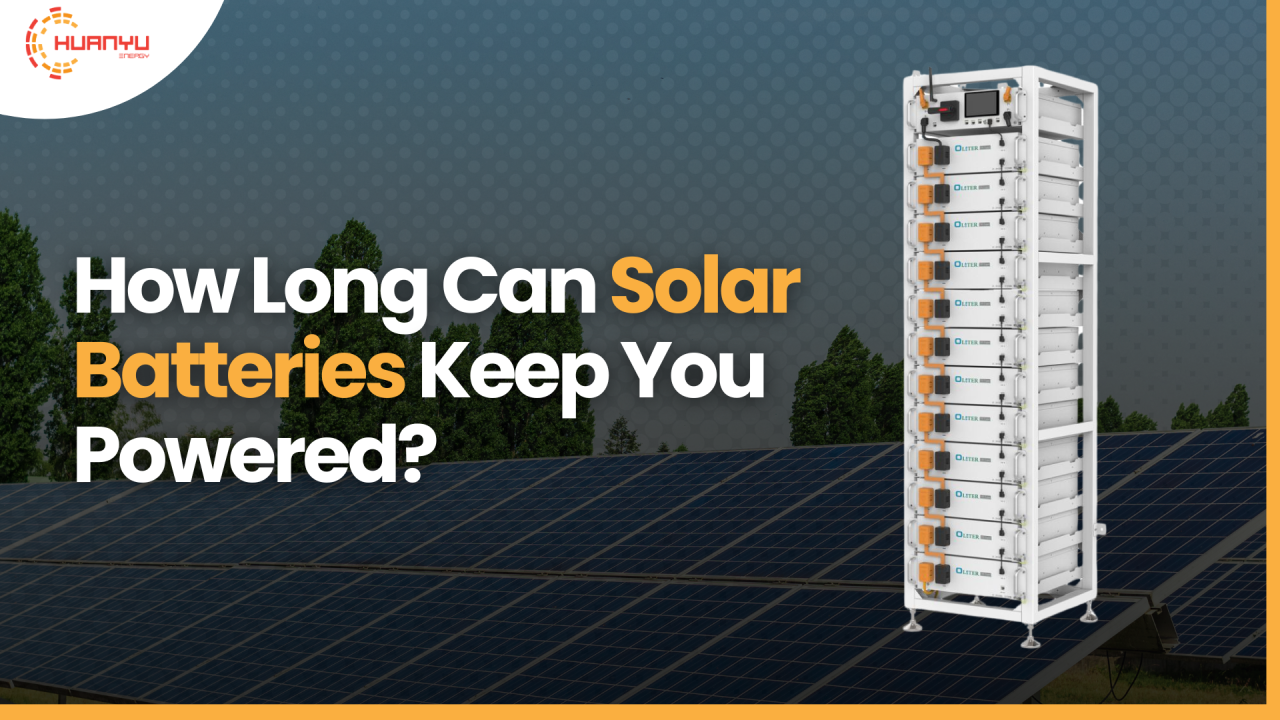
How long a solar battery can keep you powered depends on two key factors: how much energy the battery can store and how much energy your home or business uses throughout the day. Solar panels charge the battery when sunlight is available, and the stored energy is released whenever your demand exceeds solar production. Because energy use varies widely from one home or business to another, the duration of backup power can range from a few minutes to many hours or even continuous power when the system is sized correctly.
How Capacity and Usable Energy Affect Power Duration
Battery capacity, measured in kilowatt-hours (kWh), is the foundation of how long a solar battery can sustain your needs. However, not all of that capacity is usable; most batteries have a depth of discharge (DoD) limit that determines how much energy you can safely draw without damaging the system. Modern lithium-ion batteries typically offer 80–95% usable capacity. For example, a 10 kWh battery with a 90% DoD provides 9 kWh of usable power. How long that lasts depends on how quickly you consume energy high-demand appliances draw down the battery significantly faster than low-demand ones.
How Long You Can Expect to Stay Powered
In everyday use, a properly sized solar-plus-battery system can keep you powered for long periods, sometimes all day, depending on the size of the battery and your consumption habits. A small 5 kWh battery may run essential loads like lights, Wi-Fi, and small electronics for several hours, while a 10–15 kWh system can support a typical household’s moderate usage for a much longer span. Large systems, such as 20–50 kWh batteries, are capable of running homes or businesses for extended periods, especially when paired with consistent solar generation that recharges the battery during daylight.
Many real-world conditions influence battery duration. High-demand appliances such as heaters, pumps, stoves, or air-conditioning units drain energy far faster than basic lighting or electronics. System efficiency also plays a role , energy is lost during charging and discharging, usually between 5–15%. Environmental factors such as temperature can reduce performance, and the age of the battery gradually lowers its usable capacity as it accumulates cycles. These factors together determine whether a battery lasts a few hours or provides seamless power throughout the day.
Battery Type and Its Impact on Runtime
Different battery chemistries offer different runtime characteristics. Lithium-ion batteries are the most common for solar storage because they deliver high usable DoD, fast charging, and long cycle life. Lead-acid batteries, while cheaper upfront, provide significantly less usable capacity and require oversized banks to match lithium performance. Newer technologies like saltwater batteries offer sustainability benefits but typically require larger storage capacities to achieve similar runtimes.

How Long Will the Oliter High Voltage Battery Set Keep You Powered?
The Oliter High Voltage Battery Set, with its capacity of up to 50 kWh, is built to deliver long-lasting, stable power for homes, offices, and commercial environments. The amount of time the battery can keep you powered depends entirely on how quickly the stored energy is consumed. Below are general-use examples to illustrate how long a fully charged 50 kWh system can sustain different environments under typical daytime and evening activity, not just overnight operation.
Residential Use (General Daily Consumption)
Scenario: A family home running essential appliances throughout the day including refrigeration, lighting, plugs, electronics, and occasional high-demand usage. Approximate Consumption:
- Refrigerator + Kitchen Appliances: ~6 kWh
- Lighting + Electronics: ~4 kWh
- Fans/Small HVAC + General Plugs: ~6 kWh
- Additional Usage (washing machine, microwave, etc.): ~4–6 kWh
Estimated Duration: A 50 kWh system can typically power a modern household for 12–18 hours of regular, mixed-load usage. In many homes with good solar input, this battery can support nearly full-day operation, especially when solar panels recharge it during daylight.
Commercial Use (Office or Small Business)
Scenario: A medium-sized office operating during business hours with computers, lighting, security, and general office equipment running simultaneously. Approximate Consumption:
- Computers (10 units): ~8 kWh
- Lighting + Office Equipment: ~6 kWh
- Networking, Security & Essentials: ~3–4 kWh
- Occasional High Loads (printers, kettles, etc.): ~2–3 kWh
Estimated Duration: A 50 kWh battery can power a typical office for 8–12 hours of active daytime work, depending on the number of devices and employee activity. In solar-supported installations, the system can keep operations running smoothly throughout the workday with consistent charging.
Industrial / Light-Manufacturing Use (High Load Conditions)
Scenario: A facility running essential machinery, refrigeration, lighting, and key operational systems during working hours. Approximate Consumption:
- Refrigeration or Cold Storage: ~15 kWh
- Critical Machinery: ~20 kWh
- Lighting + HVAC + Support Systems: ~10 kWh
Estimated Duration: Under heavier industrial loads, a fully charged 50 kWh Oliter system provides around 5–8 hours of sustained operation. Actual runtime varies by machine type, duty cycles, and efficiency settings. For many industrial users, pairing the battery with solar allows extended operational hours and significantly lower grid reliance.
How System Sizing Determines Your Power Independence
The number of hours a solar battery can power your business or house isn’t fixed, it depends on how well the system is sized. To determine the right size, calculate your average daily energy usage, identify essential loads, and decide whether you need full-home backup or targeted backup for critical appliances. Properly sized systems can keep essential loads running smoothly throughout the day, and in some setups, the battery recharges fast enough during sunlight to maintain near-continuous uptime.
You can significantly extend how long your battery keeps you powered by improving energy efficiency. Replacing older appliances with energy-efficient models, using LED lighting, and managing high-demand appliances strategically all help preserve stored energy. Smart energy management systems can automatically shift heavy loads to daytime when solar production is high, reserving battery power for moments when solar input drops.
How Lifespan and Daily Use Affect Long-Term Performance
Beyond daily runtime, solar batteries also have a long-term lifespan measured in cycles. Lithium-ion systems typically last 10 years or more, depending on usage patterns. Shallower cycles (using only part of the stored energy) extend battery life, while frequent deep discharges wear the battery out faster. Regular maintenance, a proper installation environment, and updated firmware help maintain long-term performance.
Conclusion
How long a solar battery keeps you powered depends on battery capacity, usable energy, your daily consumption, and environmental conditions. With the right sizing and smart energy habits, solar batteries can supply reliable, long-duration power, from running essential systems for hours to maintaining nearly full-time energy independence. If you want, I can tailor these calculations for your home or business and estimate how long a specific battery size will keep you powered based on your real usage.
For premium solar batteries, solar panels, and expert support , reach out to Huanyu Energy at info@huanyuenergy.co.za or call +27 10 595 3687 today!