
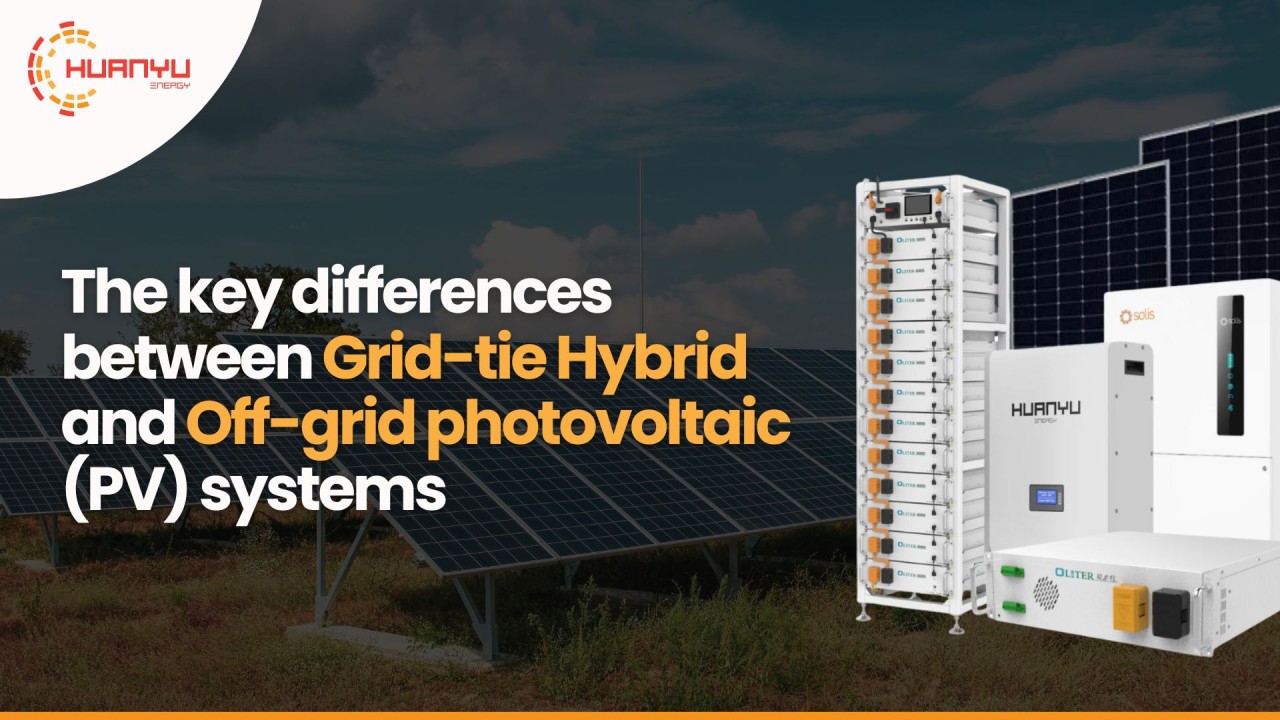
Solar power systems are built to serve different needs depending on how much independence, backup power, and flexibility a user requires. Among the most widely adopted setups are Grid-Tie Hybrid systems and Off-Grid systems. While both rely on solar panels to generate power, their design, functionality, and performance expectations differ significantly.
For component matching, compare grid-tie, hybrid and off-grid inverters, pair them with suitable battery storage, or get product guidance.
1) Grid‑Tie Hybrid PV Systems
A grid‑tie hybrid system is a solar PV installation that is normally connected to the public utility grid but also includes energy storage (batteries) and control electronics that allow the system to operate independently for limited periods (islanding) when required.
How it works
- Daytime: Solar energy powers the property. Excess energy can either charge the batteries or be sent back to the grid.
- Night/Low Sun: Load is supplied from grid power or from the batteries, depending on battery state and energy management settings.
- During outage: The hybrid inverter and automatic transfer switch (ATS) isolate critical loads and draw from the battery bank (and solar if available), providing seamless backup for selected circuits.
Key components
- PV array (solar panels)
- Hybrid inverter (AC‑coupled or DC‑coupled depending on design)
- Battery bank and Battery Management System (BMS)
- Automatic transfer switch (ATS) or islanding relay
- Energy management system (optional but common)
Benefits
- Lower battery capacity needed compared to off‑grid (grid availability as fallback)
- Potential to earn credits for exported energy (depends on local tariffs)
- Flexibility: can prioritise self‑consumption, savings, or backup
- Easier to size and generally lower total cost than a full off‑grid solution
Limitations
- Still exposed to grid policy constraints (net‑metering, export limits)
- During prolonged grid outages and low solar months, batteries may be insufficient unless oversized
Typical use cases
- Residentials with reliable grid access and intermittent outage risk
- Businesses that want resilience and tariff optimisation (peak shaving)
2) Off‑Grid PV Systems
An off‑grid PV system is entirely independent of the utility. It must supply all energy needs from onsite generation (PV) and storage, used primarily in remote areas.
How it works (energy flows)
- Solar First: Solar panels provide electricity directly to the property.
- Battery Storage: Any unused power charges the batteries.
- Night / Cloudy Weather: The system relies entirely on stored energy.
Key components
- PV array sized to production needs
- Inverter/charger (for converting battery DC to AC and charging batteries)
- Significant battery bank and BMS
- Charge controller (for DC systems)
- Optional generator for extended backup
Benefits
- Complete energy independence – no grid, no utility tariffs
- Ideal for remote locations without grid access
- Full control over energy sources and priorities
Limitations
- High upfront cost for large battery banks and robust inverters
- Requires conservative system design and disciplined energy management
- Regular generator maintenance (if installed) and higher long‑term maintenance cost
Typical use cases
- Remote homes, farms, lodges and telecommunication sites without reliable grid access
- Customers who require or prefer full energy independence

When to Choose Each:
- Grid-Tie Hybrid System: Ideal for areas with reliable grid access where users want the benefits of solar energy, along with the security of grid support and battery storage for occasional outages.
- Off-Grid System: Best for remote locations without access to the grid or for those who want complete independence from the utility/grid. It requires more planning and investment in battery storage and system sizing to ensure reliability.
Conclusion
Grid-tie hybrid systems offer a balanced, flexible solution using solar power efficiently while still relying on the grid for stability and convenience. Off-grid systems, on the other hand, deliver complete independence but demand careful planning, larger storage capacity, and higher upfront investment.
Huanyu Energy offers premium solar solutions and support. Reach us at info@huanyuenergy.co.za or call +27 10 595 3687 today!